Tag: Headlines (Page 22 of 76)

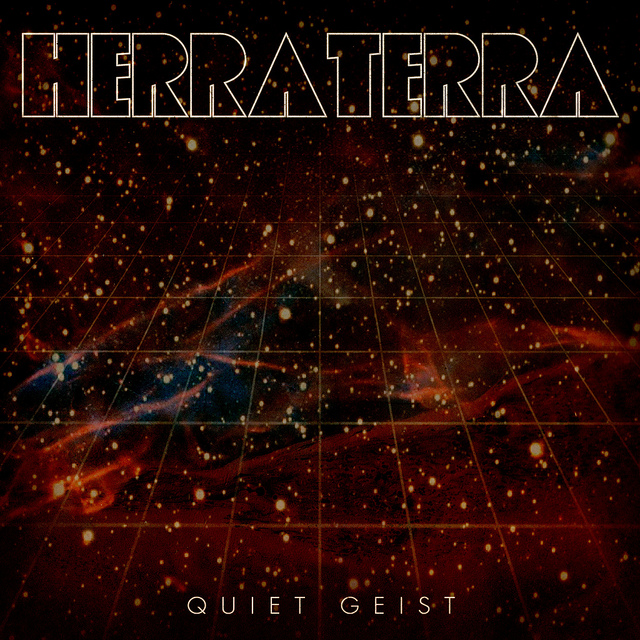
Herra Terra: Quiet Geist


RIYL: Kenna, Muse, The Killers

The press release for Quiet Geist, the new album from Northeastern electronic pop quartet Herra Terra, dared to name-check two big D’s that will get us to instinctively request a review copy like a Pavlovian dog: Depeche, and Duran. Silly us. We’ve seen this before, it’s almost never accurate, and as it turns out, it wasn’t accurate here, either. But in their defense, that’s probably because they knew that comparing it to Kenna’s New Sacred Cow would just leave people scratching their heads.

The funny thing is, we’ve heard quite a few artists lately who have taken inspiration from Kenna’s first album, the joke being that no one bought the record, but everyone seems to have heard it. And we’d bet dollars to donuts that Herra Terra could play the album start to finish at their next Halloween show, if leadoff track “Ejection Seats” is any indication. The songs are better arranged than they are written, which is not to say the songs are poor; it’s just that the music doesn’t stand above the nifty shifts in tempo or the slow builds, both of which anchor “You Were the Accelerator.” There is also the matter of singer John Paul Tonelli’s voice; It’s too muscular for the kind of music the band plays. That might sound like quibbling, but show us the last synth-driven band with a butch singer. Still, there is potential here. When the songwriting catches up with the band’s sense of atmospherics, they could be dangerous. (The Mylene Sheath 2010)

Herra Terra MySpace page
Click to buy Quiet Geist from Amazon

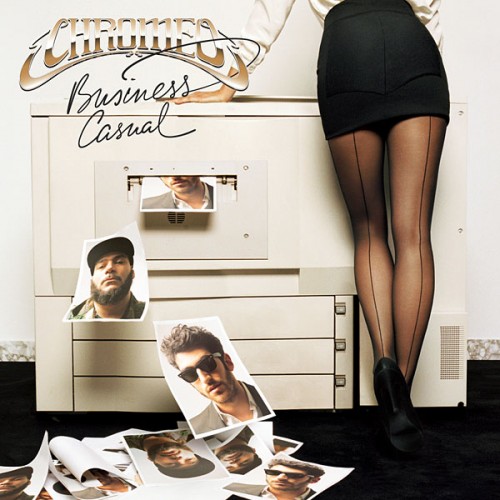
Chromeo: Business Casual


RIYL: Cameo, Zapp, Hall & Oates

If you’ve ever flipped the collar on an Izod shirt, owned a pair of Bugle Boy jeans, or purchased Hall & Oates’ Rock ‘n’ Soul, Part One on cassette or vinyl, Chromeo is your custom-built funky time machine – a synthy, vocoder-soaked trip to a parallel reality where musical history stopped in 1984. It was a pretty nifty trick the first couple of times around – and their last release, 2007’s Fancy Footwork, earned them a Daryl Hall endorsement and the ironic love of an audience too young to remember Lionel Richie’s Can’t Slow Down – but most tributes to dead genres wear thin pretty quickly (see: Darkness, The). So it would be a mistake to expect similar results from their next album, right?

Chromeo_01

Maybe not. Business Casual doesn’t really add anything new to the Chromeo formula, but it doesn’t really need to – whether or not you believe P-Thugg and Dave 1 are serious, they’re really good at recreating that early ’80s vibe, to the point where you might find yourself wondering if you requested “The Right Type” on your local Top 40 station 25 years ago. Everything, from the buzzy synths to the soulful-but-not-too-soulful vocals, sounds like it’s being beamed in from a giant boom box on the planet Atari – and more importantly, the songs are as clever as they are catchy. It’s ultimately a fairly empty exercise, and if you’re old enough to remember when this sort of stuff was originally being made, it probably seems more than a little ridiculous to be witnessing a revival of something that was regarded as inherently disposable even when it was popular. What’s sillier, though: the idea of a band intentionally mimicking yacht soul, or the fact that Lil Wayne’s “Lollipop” spent five weeks at Number One?

In the long run, it’ll be interesting to see where Chromeo takes this; even the artists they’re imitating moved on eventually, never to return. But hey, if they can deliver three albums that do this much with such a paper-thin gimmick, there might not be anything they can’t do. Break out the velour and pass the cocaine. (Atlantic 2010)

Chromeo MySpace page

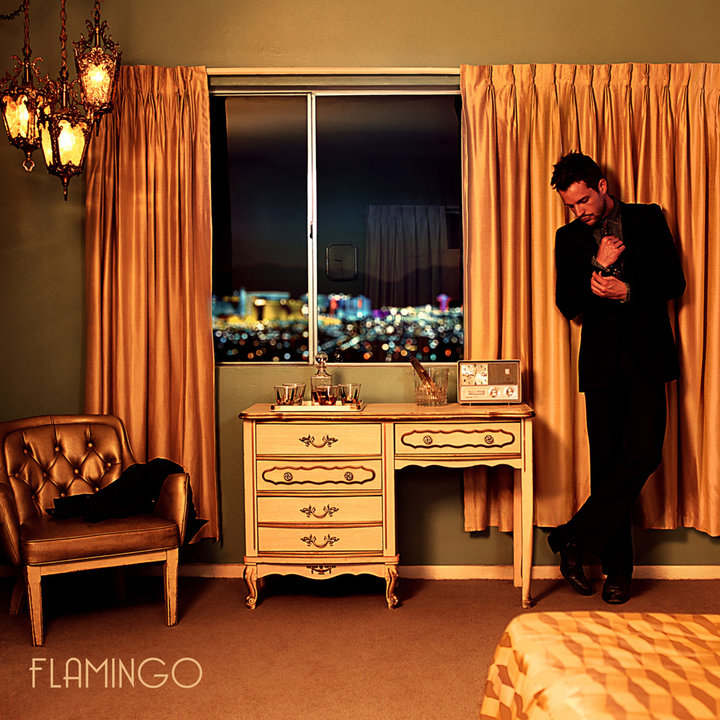
Brandon Flowers: Flamingo


RIYL: The Killers, Vigilantes of Love, U2

Brandon-Flowers-Flamingo-Official-Album-Cover[1] Flamingo, or chameleon? Listeners who mainly remember Brandon Flowers from early Killers hit singles like “Mr. Brightside” and “Somebody Told Me” may be in for a bit of a shock with his solo debut, which finds him toning down the gulpy vocal shtick that made him famous – and finally making the widescreen roots rock record he was aiming for with Sam’s Town.

Flowers has always struggled to get a grip on his outsize ambitions, and there are moments on Flamingo that don’t resonate as strongly as they’re supposed to. For the first time in his career, though, he doesn’t sound like he’s trying too hard; these songs come across more like personal statements than would-be epics. They’re still woefully derivative of Flowers’ influences – seeing Daniel Lanois’ name in the credits is going to trigger waves of eye-rolling from U2 fans who still think of Flowers as a Bono wannabe – but the difference here is that instead of trying to stand on the shoulders of giants to craft Grand Statements, he’s just using his musical DNA to write songs. It may read like a pretty fine distinction, but when it’s pouring out of the speakers, it’s huge – the difference between being handed a message and beaten over the head with it.

Of course, he’s still earnest to a fault. Flamingo might present a slightly subtler Brandon Flowers, but this is still music that leaves you feeling like you’re speeding across a lonely highway, or pensively looking out over a sepia desert mountaintop. It never hits as hard as it wants to, but so few mainstream rock records even bother asking you to really feel anything anymore – there’s something hopelessly noble about an album aimed so squarely at the heart. (Island 2010)

Brandon Flowers MySpace page

Linkin Park: A Thousand Suns


RIYL: Nine Inch Nails, Guster, growing up

First, a mea culpa to Chester Bennington.

In our review of Linkin Park’s 2007 album Minutes to Midnight, we (and by ‘we,’ we mean I) accused Bennington of wearing his sadness like a cheap suit in order to remain faithful to the band’s lyrical core, and therefore make gobs more money. This was based on two things: first, the lyrics, where Bennington sings about how miserable he was. Second, Chester’s notes in the credits, where he thanked his wife (“a.k.a. The Hotness”) and his four kids. Which produced the following thought: this married father of four is whining about how he wants to die? Oh, fuck this guy.

Should have hit Wikipedia. Bennington divorced his first wife in 2005, and married The Hotness a couple years later. He has one child with each wife; the other two are The Hotness’ from a previous relationship. So it turns out that he is indeed happily married, and presumably singing about his ex-wife, not his current one. My bad.

Having said that, Minutes to Midnight was still not a great record, though it did have its moments. They were clearly trying to add stronger melodies into the music, but most of the time, they either went too far or not far enough. The band goes a long way to rectifying this problem, along with a couple of others, on A Thousand Suns, their latest. Musically, it’s their most melodic album yet, and lyrically, it’s their most contrite, which is good, because if they spent this album still complaining about some girl or another, it would have been embarrassing. Sonically, this is their most mature album (the piano was a welcome addition), but it still maintains their glitchy roots. “Robot Boy” is not tailor-made hit single material, but it might be the band’s best song, as Bennington layers vocals – actual honest-to-goodness vocals – over a simple but effective minor-to-major chord progression, and “Burning in the Skies” appears to be Bennington taking responsibility for his failed marriage. “I’m swimming in the smoke, of bridges I have burned / So don’t apologize, I’m losing what I don’t deserve.”

The most curious song is “Blackout,” which sports a borderline bubblegum pop melody with Bennington screaming his head off for the first two verses, at which point Mike Shinoda takes over and sends the song into a furious scratch and sample-driven breakdown. From there, Bennington gives the music the pop vocal it deserves. It ultimately serves as a standalone bridge between the band’s past and their present, as does “When They Come for Me,” which begins as a jungle drum-heavy showcase for Shinoda, only for the band to slip in a killer pop hook within the chaos. “Iridescent” is as big a lighter-waving anthem as the band’s ever done, and “The Catalyst” is simply huge. Several interludes fill in the cracks (lyrical callbacks and foreshadows abound), though one stands above the others: “Wisdom, Justice and Love,” where the band takes a vocal sample from Martin Luther King Jr. and slowly morphs his voice into robotic menace.

Growing up is never easy, especially when you’ve made a career out of articulating every confused thought in your head. But every band gets happy at some point if they stick around long enough, and Linkin Park finally does it here. It may have taken a decade to do it, but strangely it doesn’t seem like it took too long. If anything, it’s impressive to see a band who defined themselves with all things adolescence (angst, profanity, hip hop, hardcore) find a way to maintain those elements in their sound, yet grow beyond them at the same time. Fans of the Hybrid Theory-era Linkin Park will probably hate A Thousand Suns, of course, but that happens to every band, too. They might lose more fans than they gain in the short run with this one, but there isn’t any question which of the two albums will have a longer shelf life. (Warner Bros. 2010)

Linkin Park MySpace page
Click to buy A Thousand Suns from Amazon

Amusement Parks on Fire: Road Eyes


RIYL: Swervedriver, Silversun Pickups, Anberlin

Michael Feerick might only be in his mid-twenties, but the UK singer-guitarist has already been making his living as a working musician for the better part of six years. Amusement Parks on Fire, the band formed around Feerick in 2004, released its debut album on INVADA, a label owned by Portishead’s Geoff Barrow, and then went on to sign with V2 for their Out of the Angeles (2006) sophomore outing. During that time, Amusement Parks on Fire toured the world with everyone from the Psychedelic Furs to the Kaiser Chiefs, and have been favorably compared to bands from the golden era of shoegaze. The comparisons aren’t off base.

On Road Eyes, APoF’s new third album, the reverb-soaked guitars and choral background vocals owe a debt to classic Creation Records artists like Ride and Swervedriver. But it’s Feerick’s devotion to melody that makes the songs so irresistible. Tracks like “Inside Out” and “Wave of the Future” pack all of the fuzzed-out guitar muscle one comes to expect from a band like APoF, but it’s the vocal hooks that keep you coming back. Even on the slow-burners (“Inspects the Evil Side”), Feerick balances out the atmospherics with his soothing vocal delivery.

Produced by Michael Patterson, Nic Jodoin, and the band, Road Eyes works on two levels. It’s the kind of album that will please the holier-than-thou tastemakers in places like Silver Lake and Portland, but also has a fighting chance to find a home on modern rock radio. Now signed to indie Filter Recordings, it might take a song placement in an Audi commercial, or something along those lines, to get the UK based group the shot they deserve, but Road Eyes is certainly worthy of the attention. (Filter Recordings 2010)

Amusement Parks on Fire MySpace page

« Older posts Newer posts »