Category: Rock (Page 18 of 241)

Bachman & Turner: Bachman & Turner


RIYL: Bachman Turner Overdrive, The Guess Who, Aerosmith

If you dig classic rock, but are sick of hearing the same Led Zeppelin, Pink Floyd and Steve Miller Band tunes, sometimes it’s nice when one of these acts releases something new after all these years.  Sometimes it’s not nice, but that’s a comment for another review.  In this case, we have Bachman & Turner’s debut album, but it’s not really a debut.  They were the two front guys for ‘70’s rock institution Bachman Turner Overdrive, a band that created some of the greatest, well, classic rock tunes in history – “Takin’ Care of Business” and “Ya Ain’t Seen Nothin’ Yet” being among the biggest.  So after a few decades, Randy Bachman was working on a solo album and asked Fred Turner to sing a few songs, and the rest is history.  But here’s the thing: aside from more strained vocals, this stuff is almost as good as the stuff they released in the ‘70s.  It’s not a band trying to sound current; it’s Bachman and Turner being Bachman & Turner. The album is a complete set of 12 songs, but a few stand out: the rocking “I’ve Seen the Light” and gang-vocal driven “Rock and Roll is the Only Way Out,” as well as “That’s What It Is,” which sounds a bit like Bachman backed by Steely Dan and Todd Rundgren; and “Moonlight Rider,” which has a Clapton-esque feel and could have easily been a hit in 1976.  These songs are timeless, the duo’s playing is timeless, and this just may give classic rock radio a few new songs to add to the format.  (RBE Music/Fontana 2010)

Bachman & Turner website
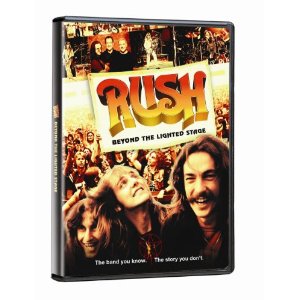
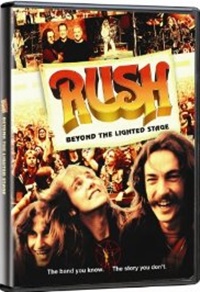
Rush: Beyond the Lighted Stage

One thing about Rush fans is that they crave more from the band, and the band is more than happy to fulfill that request. Case in point is the long awaited film, “Rush: Beyond the Lighted Stage” – the 106-minute movie that chronicles the band’s history from local Toronto high school and bar band, to the world’s biggest cult act.

The film, produced and directed by Scott McFadyen and Sam Dunn, is novel for the access they had to band, the archival footage of the band’s early years, and key people in Rush’s career.  The strength of this documentary is how much the of the early years is covered in exhaustive detail.  From their difficulty in getting a record deal (a common tale for many ‘o bands), to being catapulted into A-list shows after hiring Neil Peart as their new drummer, to the lyrical and musical overreach with their album Caress of Steel. It’s all here in glorious detail from the band’s perspective.

What most fans of the band know is that with 2112, the album that was middle finger salute to the record company demanding a more commercial sound, Rush finally connected with their audience in a way that made them untouchable to the meddling of the suits.  In other words, with 2112 selling millions of copies, Rush finally became bankable and thus able to chart their own musical course with both long form and more compact albums – like the perennial favorite, Moving Pictures.

While the documentary is quite good at presenting the details of their early and middle years of their career, the film falls short in exploring the years that divides many Rush fans: the “synth” years in the ‘80s. The filmmakers (probably owning to time constraints) weren’t able to go into detail on albums like Grace Under Pressure, Power Windows, Hold Your Fire, or even Presto, nor did they focus on Vapor Trials or Snakes and Arrows all that much. What they did focus on was the fawning commentary from artists like Billy Corgan, Jack Black, Sebastian Bach, and even Les Claypool.  After a half hour of hearing how great Rush is, I was muttering at the TV, “Okay, I get it! You love the band. Do I really need to hear it every 10 minutes?”

Still, these are just a few quibbles in an otherwise great DVD.  And in keeping with giving fans more, the filmmakers include a bonus disc that has a number of live performances, expanded interviews, and even a dinner with the boys that shows what a bunch of goofs they are. As a gift for any serious music fan, this DVD is a must to put on your gift list. (Zoe Records 2010)

Kid Rock: Born Free


RIYL: Bryan Adams, Bob Seger, Glenn Frey

It still hardly seems possible to those of us who remember the gleefully profane, barely conscious persona he cultivated with his first four albums (including his 1998 breakthrough Devil Without a Cause), but Kid Rock has somehow become the heir apparent to Bob Seger’s Motor City rock ‘n’ roll throne. In fact, modern rock is such a graveyard that Rock is damn near an elder statesman of the genre – the kind of artist who routinely draws fawning reviews from Rolling Stone, along with interviews where he’s given a forum to roll his eyes at Steven Tyler joining the judges’ table on “American Idol.” Actually, on that last count, Rock’s no guiltier than the rest of us. But you get the point – that stringy-haired honky rapper with the glassy-eyed stare and the fedora-and-wife-beater wardrobe was never supposed to grow up and give us songs like “Rock N’ Roll Pain Train,” “Rock N’ Roll,” “Rock N Roll Jesus,” and “Rock On.”

But here we are with Kid Rock’s eighth(!) studio album, the flag-wrapped Born Free, offering up a dozen mind-numbingly bland alternatives to actual old-time rock ‘n’ roll. If Seger’s classic records are as solidly unassuming as a cold can of Stroh’s, consider Born Free the equivalent of Natty Light – it’s cheap, and it’ll get the job done if you’re desperate enough, but it really should be better. Really, for the most part, this sounds a lot like an early ’90s Bryan Adams record – which is sort of fitting, considering that Adams’ Canuck take on heartland rock was just as counterfeit as this corny, Rick Rubin-produced collection of would-be anthems and motel ballads.

It feels strange to miss the guy who made songs as proudly brain-dead as “Bawitdaba,” but at least that song had balls and a dangerous vibe, however slight; these days, Rock’s gelded, commercial-ready music is slickly competent at best. On the Born Free album cover, he’s reclining in the back of a convertible, feet up on the seats, amber waves of grain in the background. You can’t tell that the car is rolling gently down the middle of the road, but you can definitely see that no one’s in the driver’s seat. (Atlantic 2010)

Kid Rock MySpace page

Queensryche: Empire (20th Anniversary Edition)


RIYL: Dream Theatre, King’s X, Judas Priest

Operation: Mindcrime might have been the record that established Queensryche, but Empire was the record that blew them through the artistic and commercial ceiling. There is some excellent work that follows this period, and the band still churns out very good records to this day; it’s just that Empire is nearly perfect. The lyrics as always challenged the listener to think, the guitar work is stellar, singer Geoff Tate’s voice is monstrous, but the entire record was full of hooks. The sound is enormous, filling your ears with almost more than they can handle. The tracks blasted out of your speakers and into the back of your consciousness forever. “The Thin Line,” “Jet City Woman,” and “Another Rainy Night Without You” were built for arena audiences to sing back to the band. “Silent Lucidity” became their one and only number one single (on the rock charts, anyway). Twenty years later, it still sounds terrific.

Queensryche_07

What does the 20th anniversary package contain that may make it tempting to grab? Three bonus tracks that have appeared elsewhere are tacked on to the end of Empire. The second disc contains a terrifically loud and monstrous live show recorded in 1990 at London’s Hammersmith Odeon and features seven tracks from Empire. This performance doesn’t always have the perfect mix (Tate’s voice isn’t loud enough on opening track “Resistance”) and there are moments where you can hear feedback, like during the opening seconds of “Silent Lucidity.” It is these imperfections that make this such a terrific complementary piece. Queensryche is a machine. To hear those tiny miscues as the band pounds out this terrific material is a reminder of the raw energy underneath those fabulously professional musicians. If you don’t have the record, what the hell is the matter with you, seriously? If you don’t own any live Ryche, this is a real cool recording. (Capitol/EMI 2010)

Queensryche official site

Black Dub: Black Dub


RIYL: Daniel Lanois, Chris Whitley, Robbie Robertson

In 1990, Daniel Lanois was instrumental in getting Chris Whitley signed to Columbia Records; his keyboard player and production protégé, Malcolm Burn, ended up producing Whitley’s stellar debut, 1991’s Living with the Law, and Lanois maintained an association with Whitley throughout the late, great alien bluesman’s career (that’s Lanois’ ghost-webbed lead guitar on the Whitley track “Weightless”). Chris passed away in 2005, but his daughter Trixie has grown into a fine singer and recording artist in her own right – and now she’s carrying the Whitley/Lanois connection into a new generation as a member of Black Dub.

Lanois is Black Dub’s guitarist and producer, as well as the most famous name – the lineup also includes drummer Brian Blade and bassist Daryl Johnson, names that will be familiar to liner notes junkies and few others – so it’s understandable that he’ll get the lion’s share of the publicity spotlight for this release. And to be fair, his sonic thumbprint is all over Black Dub; it’s a thick, reverb-drenched record, heavy with vibe and run through the dark, sepia-toned filter he’s used for many of his best projects. But make no mistake, this is a band project – not just because Trixie Whitley’s throaty, gospel-tinged vocals are all over the record, but because it actually sounds like people playing together in the same room. The music might be covered with that Lanois blanket, but that only keeps it warm. This record moves and breathes. It’s a shame that these are such rare qualities in major-label rock music, but if you miss the sound of musicians working together, Black Dub is a cure for what ails you.

More importantly, the songs are some of Lanois’ best. His solo albums have plenty of high points, but they’re also littered with more than their share of filler; in contrast, Black Dub holds together as a cohesive whole, from the sort of frayed, abstract blues meditations that the elder Whitley might have recorded (“Ring the Alarm”) through slow-burning vocal showcases for Trixie (the torch ballad “Surely”) and sideways roots excavations (the “Wade in the Water”-lifting “Last Time”). Lanois says Black Dub came together after he started writing songs with Trixie Whitley in mind, and it’s obvious that having a new muse has energized his songs – but it’s had an impact on him as a performer, too, as evidenced by his lead vocal on the album’s most moving track, “Canaan.”

Whitley has a recording career of her own, and Lanois is always busy as a producer (not to mention restless), so there’s no telling when, or if, Black Dub will reconvene. Having a hit with their debut couldn’t hurt, though, so do your part and pick up a copy today. (Jive 2010)

Black Dub MySpace page

« Older posts Newer posts »