Author: Jeff Giles (Page 3 of 41)

Elton John & Leon Russell: The Union


RIYL: Leon Russell, classic Elton John, aging gracefully


For the majority of the ’70s, Elton John was positively unstoppable – and for much of the ’80s, he was so creatively bankrupt that by the time he returned to limited form with 1987’s Reg Strikes Back, it was such a welcome surprise that he’s been handed a pass for most of the lukewarm adult contemporary pop he’s released in the intervening two decades and change. Compared to Leather Jackets and Ice on Fire, late-period Elton like Songs from the West Coast and Peachtree Road is a step up, but those albums still lack the heat and creative energy of his best work, and a lot of the positive reviews he’s gotten over the last couple of decades have come through a combination of blessed relief and the standard grade inflation enjoyed by veteran artists who manage not to suck outright.

Leon Russell, meanwhile, has never released anything as half-baked as the junk Elton was peddling at his nadir – but then, Leon never had as far to fall as Elton, and he’s had the luxury of carving out a low-key career for himself as an indie artist in between tours and session cameos. If people know Russell’s name at all, it’s usually because of his early ’70s work; his more recent releases might be second- or third-tier stuff, but they had fewer people to disappoint. All of which is a roundabout way of saying that the prospect of Elton and Leon teaming up for The Union, while intriguing, had the look and feel of a classic rock setup – the kind of project with a strong concept, and executed by performers with undeniable talent, but bound to underwhelm because the artists can’t, or won’t, light their creative spark.

So here’s a happy surprise for anyone who’s suffered through Elton’s post-’70s work and wondered when he’d shift back out of second gear, or been frustrated that Russell hasn’t found more suitable showcases for his talent: The Union is not only the best thing either of them have done in years, it’s a vibrant, rootsy template for how many of their peers (coughBillyJoelandRodStewartcough) can get their mojo back.

What’s the difference? It’s true that some of the songs have more bite, including the rave-ups “Monkey Suit” and “A Dream Come True,” as well as the winking first single “If It Wasn’t for Bad,” but there’s also plenty of room for sleepy ballads like “The Best Part of the Day.” What really sets it apart is T Bone Burnett’s production, which strips back the synthetic varnish that both artists have leaned on too often and exposes the knots and whorls in their finely aged voices – and, more importantly, captures some of the best-sounding piano tracks either of them have laid down in the last 30 years. It’s obvious that a lot of money went into The Union – Booker T. Jones, Jim Keltner, Brian Wilson, Neil Young, and Robert Randolph are some of the guests – but it all went into capturing pure performances, rather than dressing them up. This is a loose, vibrant record, and while it isn’t entirely free of the schmaltz that’s plagued Elton’s later albums in particular, it’s obvious that having Russell as a foil (and Burnett’s strong, minimalist hand in the studio) has brought out the best in him. The musical fruition of a friendship struck up 40 years ago, The Union brings Elton John and Leon Russell full circle – and should bring a smile to the face of anyone who’s been holding out hope that both artists would find their way back to what made their music special. (Mercury 2010)

Elton John MySpace page

Guster: Easy Wonderful


RIYL: Barenaked Ladies, Camper Van Beethoven, Ben Folds

In today’s one-and-done record industry climate, it’s something of a miracle that Guster has managed to survive for nearly two decades – they’ve never had a hit, they aren’t the kind of band that inspires much in the way of promotional dollars from labels, and they aren’t hip or edgy enough to create a buzz with the Pitchfork/NPR crowd. Yet they persist, and thank goodness for that – even though each new album feels like it could be the last.

By all accounts, making Easy Wonderful almost did them in for good, thanks to an aborted run of sessions with producer David Kahne that left the band questioning whether they had a future. It took a retreat to the Nashville studio of departing Guster member Joe Pisapia to refuel them – and produce their most layered, eclectic album to date.

Guster_09

For some longtime fans, the words “layered” and “eclectic” carry the sting of betrayal; Guster started out as an acoustic-based trio, and drummer Brian Rosenworcel – a.k.a. “Thundergod” – was famous for not playing with sticks. Starting with 1999’s Lost and Gone Forever, Guster has slowly moved away from the simplicity of its earlier sound, and each subsequent release (2003’s Keep It Together and 2006’s Ganging Up on the Sun) has utilized an increasingly complex, anything-goes aesthetic with room for everything from banjos to whistling solos, typewriter percussion, and dance beats.

It isn’t as innocent a sound, but then, a lot of Guster’s songs deal with the loss of innocence – with regret, loneliness, and emotional distance, and a burning, childlike hope that persists in spite of it all. It’s a deeper artistic outlook than most, and it makes sense that the songs’ arrangements should reflect that. There’s a fine line between “grown-up pop” and “mid-tempo morass,” though, and Guster has occasionally erred on the wrong side; chunks of Keep It Together and especially Ganging Up on the Sun felt like the work of a band that was struggling to mature without losing its energy.

Happily, Easy Wonderful doesn’t really have that problem. The songs are still resolutely mid-tempo, and if you listen with it in the background, that’s where the album will stay – like most Guster releases, it isn’t grab-you-by-the-collar music. Even the most radio-ready stuff – whatever that means in 2010 – takes a few listens to really reveal itself. And some fans will doubtless be disappointed in this set’s lack of an epic Guster ballad along the lines of “Come Downstairs and Say Hello” or “Ruby Falls,” but these songs have a melodic urgency that seemed like it might be draining from their music. They aren’t exactly punchy, but they have an increased focus, and as densely woven as the arrangements can be, Easy Wonderful never feels busy – the fact that three of the tracks clock in under three minutes is a testament to the disciplined songwriting.

All in all, Easy Wonderful is Guster’s best, most emotionally resonant work since the wonderful Lost and Gone Forever. It has a problem, though, and it’s a major one: vocalist Ryan Miller hogs the spotlight here, leaving almost no room for Adam Gardner, whose harmonies (and occasional leads) were one of the best things about the band’s sound. Miller’s a fine singer, and his keening voice is perfect for the band’s earnest, hopeful music, but it just doesn’t feel like Guster without that vocal blend. The world already has one Hall & Oates, guys – if you hang in long enough for another album, make sure you share the mic more often. (Aware 2010)

Guster MySpace page

Raul Malo: Sinners & Saints


RIYL: The Mavericks, Roy Orbison, Texas Tornadoes

51jgaIohSgL._SCLZZZZZZZ_[1] Raul Malo is an awesomely gifted vocalist and musician, but his solo career has been long on quantity (seven albums in less than a decade) and short on quality control. Too often, his solo albums have given the impression that Malo’s years with the Mavericks wore him out – he’s been content to coast with covers projects, like 2006’s syrupy You’re Only Lonely or 2007’s country-focused After Hours, or specialty-market releases like The Nashville Acoustic Sessions and his Christmas album, Marshmallow World and Other Holiday Favorites. All of which have been fine, in their limited fashion, but nowhere near as exhilarating as those Mavericks records. Without a band to push him forward, it sounded like Malo was happy to keep things at a pleasant, undemanding drift – 2009’s Lucky One, which packed a dozen Malo originals and hearkened back to his days as one of country’s most exciting young performers, seemed like a pit stop between covers projects.

It’s a pleasant surprise, then, that he carries over some of that spirit with Sinners & Saints, a largely self-penned collection that Malo calls “as much of me as I’ve ever put on a record.” It’s brief – ten tracks and under 45 minutes – but its abbreviated length keeps Malo from indulging his weakness for drawn-out ballads, and the result is the loosest, most energetic studio album of his solo career. Recorded with a stellar supporting cast (including Augie Meyers and Shawn Sahm), Sinners highlights the breadth of Malo’s talents, with hints of pop, rock, country, and Tex-Mex in the mix – but it’s also a focused affair, an album where even the longest songs (like a six-minute cover of Rodney Crowell’s “‘Til I Gain Control Again”) feel lean and tightly arranged.

Raul Malo once seemed destined for superstardom, but his career lost momentum in the late ’90s, and Sinners & Saints probably isn’t going to change that. It does, however, prove that this once-prolific songwriter still has some gas left in the tank, as well as plenty of his old passion for playing in the borders between genres. The faithful will be pleased, and if you’ve got a little room in your musical diet for a restless troubadour with the voice of an angel, it just might make you a fan. (Fantasy 2010)

Raul Malo MySpace page

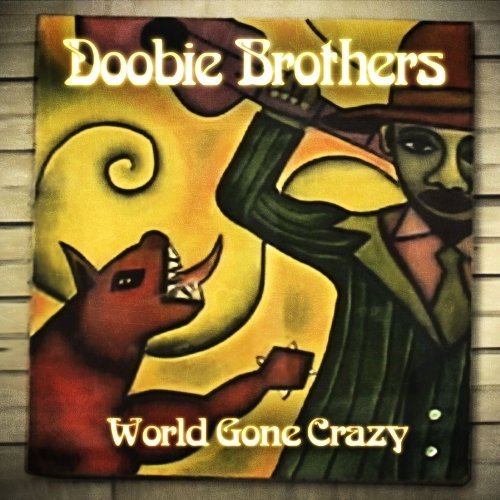
The Doobie Brothers: World Gone Crazy


RIYL: Bob Seger, The Eagles, Boston

51R3XNkkyPL._SCLZZZZZZZ_[1] News of World Gone Crazy‘s existence is likely to elicit one of three responses:

1. “The Doobie Brothers have a new one out? Who knew those dinosaurs were still around?”
2. “The Doobie Brothers have a new one out? Hope it doesn’t suck as much as their last couple of records!”
3. “Hell yeah! Good rockin’ tonight!”

Responses one and two might seem to make the most sense, but against all odds, it’s the third one that most accurately describes the Doobies’ 13th album (and first in a decade). After scoring a gold record and a Top 10 single with their 1989 reunion album, Cycles, they limped through the ’90s and aughts, releasing a pair of weak albums (1991’s Brotherhood and 2000’s Sibling Rivalry) and wheezing into the “heritage rock” tour circuit like a band whose best creative days were long past. But World Gone Crazy isn’t just another piece of swag to sell at the concession stand during their next tour – it’s actually a helluva rock record, and easily the Doobies’ best album since 1978’s Minute by Minute.

Is that damning with faint praise, considering the unevenness of what came after? Perhaps. But World Gone Crazy is still a quality album – good enough, in fact, to serve as a template for the band’s peers during their own sporadic forays into the studio. It’s a record rich with nods to the past, including the band’s reunion with Ted Templeman and their resurrection of “Nobody,” a long-discarded track re-recorded for these sessions – but this doesn’t sound like a band trying to get back to its past. Instead, the Doobies simply sound comfortable with their legacy and their place in today’s music industry. It makes a world of difference – unlike a lot of new albums from bands of the Doobies’ vintage, World Gone Crazy never tries too hard. The Doobie Brothers are who they are, and while they’re willing to acknowledge their past (right up to inviting ex-Doobie Michael McDonald in for a guest spot on one track), there’s nothing self-conscious about these performances. They may as well have been performing for themselves.

Of course, it helps that the album is stacked with good songs. This is meat-and-potatoes West Coast rock ‘n’ roll, so you shouldn’t go in expecting poetry, but within the context of a genre that hasn’t seemed to have a creative pulse for far too long, World Gone Crazy is surprisingly vibrant. “Nobody” sounds like it was unearthed from a time capsule, which is understandable, given its age – but what’s surprising is just how seamlessly it stands up against everything else on the album. Open a beer – American, of course – and turn this up as loud as the neighbors will allow. Then ask yourself why bands like the Doobie Brothers ever went out of fashion. (HOR 2010)

Doobie Brothers MySpace page

John Legend and the Roots: Wake Up!


RIYL: Bill Withers, The Roots, Raphael Saadiq

john-legend-roots-wake-up-cover-e1279246652953[1] Before he reached the presidency – and thus subjected himself to at least four years of being picked apart, second-guessed, and portrayed as a letdown by pollsters and pundits – Barack Obama was a signal of meaningful social change, and a source of profound inspiration, to millions of Americans. His roots as an urban community organizer served as a reminder of a time when community really meant something – particularly in the black community – and raised hopes for a return to outreach, investing in urban infrastructure, and a renewed focus on the common good.

People were hoping for a paradigm shift, in other words, and those never happen as quickly, simply, or clear-cut as we feel like they should (as a passing glance at any newspaper will tell you). But that’s the thing about major change: As slowly as things might seem to be moving on the surface, moments of inspiration have a way of paying unexpected dividends. Case in point: John Legend and the Roots’ Wake Up!

Conceived during the 2008 election, Wake Up! combines Legend’s political awakening with the Roots’ peerless soul scholarship to produce an album that functions on two levels: One, as a call to greater personal responsibility and communal awareness, and two, as a sort of gateway into the classic records Legend and the Roots chose to cover. As chief Roots ambassador ?uestlove points out in the liner notes, these songs will be appreciated by two generations – the folks who still remember Baby Huey, Bill Withers, Harold Melvin, and Donny Hathaway, and the younger listeners who have grown up hearing bits and pieces of the music repurposed for hip-hop beats. (In a nifty, knowing twist, Wake Up! includes a cover of Ernie Hines’ “Our Generation” that features a guest verse from CL Smooth, who sampled the song 18 years ago.)

There’s something a little off-putting about the fact that a call to attention this powerful has to rely so heavily on songs that have been around for decades, and listening to Wake Up! – as with the Dirty Dozen Brass Band’s similarly themed 2006 cover of Marvin Gaye’s What’s Going On album, conceived in the wake of Hurricane Katrina – you may find yourself alternating between feelings of joy and disappointment. It’s hard not to wonder why today’s young soul artists aren’t making new music this marvelously aware – or why, if Legend was going to end the album with an original cut, he couldn’t have come up with something more deserving than the mawkish “Shine.”

On the other hand, great music is timeless, and there’s no denying that every one of these classic songs is every bit as resonant today as the day it was originally released – or that Legend and the Roots prove capable, empathic interpreters of the material. Wake Up! isn’t a new soul classic, but it reaffirms the undimmed relevance of the artists who helped shape the genre’s golden era. Here’s hoping the album expands the spirit of inspiration that brought it to life – and that other artists heed its title’s call. (Columbia/G.O.O.D.)

John Legend MySpace page

« Older posts Newer posts »