
RIYL: Tom Tom Club, Kid Creole & the Coconuts, the Boneshakers
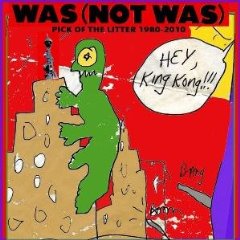 In a perfect world, Was (Not Was) would be celebrating its 30th anniversary with something other than a vault-polishing compilation on a label known for reissuing old K-Tel records and The Best of the Five Man Electrical Band – but then, this is a band that has always reveled in the odd and inappropriate, so it’s only fitting that the band is celebrating its most recent milestone by giving us Pick of the Litter 1980-2010. It isn’t as good as a new album, but as far as reheated leftovers go, Litter ain’t bad, either in terms of breadth (19 tracks, culled from across the band’s entire catalog) or selection (five non-album mixes, including the 12” version of “Wheel Me Out” and the 7” version of “Out Come the Freaks”). Was (Not Was) has also never received a proper anthology, so this set actually fills a need for that small subset of the population that has warped enough taste to appreciate the band’s cracked dance music, but has somehow never bought any of its albums. A microscopic market, maybe, but Pick of the Litter still hangs together better than it has any right to, considering it contains vocal performances from Mel Torme, Leonard Cohen, Kim Basinger, and Ozzy Osbourne – and still makes plenty of room for the peerless Sir Harry Bowens and Sweet Pea Atkinson, whose dash of grit was always the cornerstone of the band’s appeal. Novelty tracks aside, Was (Not Was) helped keep soul music alive in the ‘80s. If you’ve ever wanted to know more about those “Walk the Dinosaur” guys, here’s the perfect place to start learning. (Micro Werks 2010)
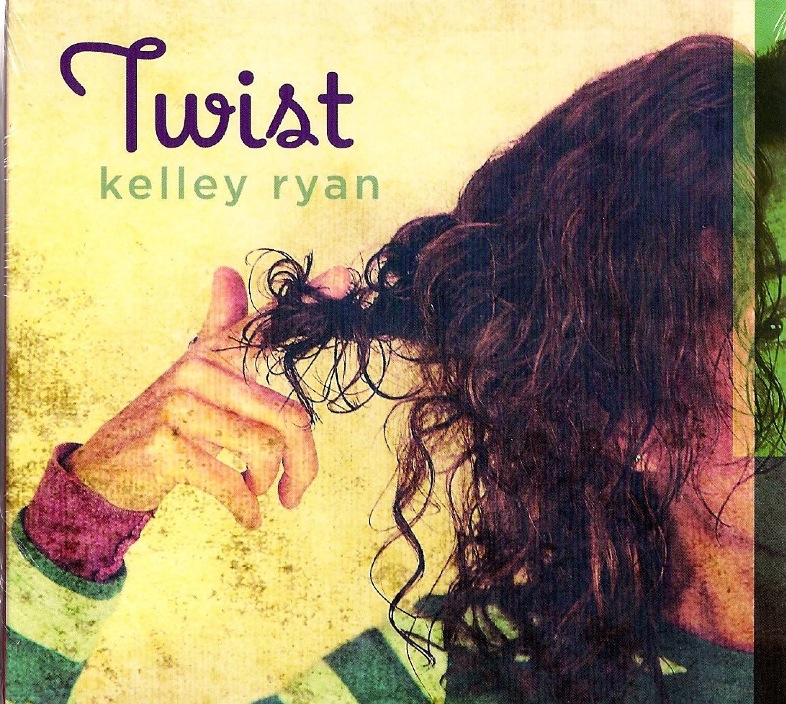

 As slight and pretty as a sundress on the first day of June, Kelley Ryan’s Twist finds the astroPuppees frontwoman making a deliberate shift away from what she calls “the rock boy way” of doing things, and toward a gentler sound, driven largely by acoustic guitars and layers of lush harmonies. Ryan’s in good company here, too: She recorded Twist with Don Dixon and Marti Jones, drafted Van Dyke Parks to lend string arrangements to a pair of tracks, and dug into the Beck songbook for a cover of “Lost Cause.” All solid marks in Twist’s favor, to be certain, and when the album lives up to its pedigree – as on the shimmering, gently descending opening track, “About a Girl” – it feels like a long-lost artifact from the golden mid ‘80s era of jingle-jangly singer-songwriter pop. Too often, though, Ryan uses her stylistic shift as a license to hide behind arrangements that don’t do much besides lie there and look pretty, or rhyme “love” with “above.” The end result is an album that might leave you feeling like you’ve just woken up from a pleasant dream – it’s soft, and warm, and no more than five minutes after it’s over, you won’t remember a thing. It’ll add an interesting wrinkle for astroPuppees fans, but there’s no shortage of similar-sounding records, and for anyone who isn’t already familiar with Ryan’s work, this really isn’t enough of a Twist. (Manatee Records 2010)


