Category: CD QuickTakes (Page 6 of 149)

Norah Jones: …Featuring Norah Jones


RIYL: Diana Krall, Eva Cassidy, Bonnie Raitt

Since beginning with the smash hit Come Away With Me in 2002, Norah Jones’ recording career has been a study in slow, carefully measured decline. Clearly not willing to pigeonhole herself as a crooner of piano ballads, Jones has tugged away from the dulcet tones of her debut – but because she has label bosses to answer to (or maybe just because she’s smart enough to stay the course), she hasn’t totally broken with the sound that made her famous, and the result has been a string of lukewarm records that hint at the artist Jones wishes she could be, if only the stakes weren’t so high.

The shame of it all is that Jones’ kitten’s purr of a voice, while perfect for selling lattes, sounds just as fine – if not finer – out of its established context. Over the years, Jones has built a reputation for herself as a terrific guest vocalist with a wonderful sense of humor, popping up on recordings by everyone from Outkast to Ray Charles, and singing about everything from Chex Mix (on the Lonely Island song “Dreamgirl”) to motherfuckers (Peeping Tom’s “Sucker”). Sadly, neither of those songs made the cut for this collection, but you get the idea: …Featuring Norah Jones might bear the unmistakable stink of a contract-fulfillment release, but by bundling up 18 noteworthy collaborations, it does an arguably better job of highlighting her strengths than anything since Come Away With Me.

If there’s a real quibble here, it’s that the really left-field stuff (like the Lonely Island and Peeping Tom songs) was left off, and while you do get to hear Jones doing stuff she can’t do as a solo artist (like playing hook girl for Q-Tip and Talib Kweli on “Life Is Better” and “Soon the New Day,” respectively), much of …Featuring‘s charms are more subtle, like hearing her slip inside Joni Mitchell’s “Court & Spark” alongside Herbie Hancock, or her lovely vocals for Charlie Hunter’s “More Than This” cover. Taken as a whole, it doesn’t reinvent Jones’ sound the way she often seems halfway inclined to do, but it’s a damn sight more interesting than, say, 2009’s The Fall. Here’s hoping she listens to this compilation often while composing her next full-length set. (Blue Note 2010)

Norah Jones MySpace page

Rihanna: Loud


RIYL: Beyoncé, Mary J. Blige, Christina Aguilera

Like any pop princess, Rihanna is only as good as the songs she’s given – which inevitably becomes a problem once sales drop and the label stops paying for top-shelf stuff (just ask Brandy, Monica, etc.) But on the occasion of her fifth album, Loud, she’s shining as brightly as any star in the music business, and the result is a singles-stuffed collection that, while certainly uneven, reestablishes Rihanna as a capable, charismatic vocalist.

As the title indicates, this isn’t exactly an introspective disc; even by the rather limited standards of modern R&B, the lyrics are a noticeable weak point. Fortunately, it usually doesn’t matter; for instance, although it’s redeemed by its earworm chorus and a goofy Drake cameo, “What’s My Name” is about as annoyingly basic as it sounds, while “Cheers (Drink to That)” is an average club anthem enlivened by strong production (including a nifty, unexpected a cappella interlude) and “Only Girl (In the World)” is a stone dumb club banger that perseveres by sheer virtue of insistence. Meanwhile, “S&M” and “Skin” are your average boudoir tracks, set apart only because Rihanna’s one of the better singers working in the genre.

Production and vocal power can’t save everything – power ballad “California King Bed” is a lumpy disaster that sounds like something Diane Warren found stuck to her shoe (“In this California king bed / We’re 10,000 miles apart”), and “Complicated” is the kind of love-to-hate-you number that Rihanna’s done better before (like on, say, “Hate That I Love You”). On the whole, though, the wheat-to-chaff ratio is admirably high; in such a singles-driven genre, it’s rare that you hear an album this light on filler, and given Rihanna’s hectic recording schedule, it’s easy to imagine a radio-worthy track missing single release. The gently stuttering “Fading” is the best kiss-off ballad she’s ever done, while the aggressive, reggae-tinged “Man Down” and the stomping “Man Down” (featuring Nicki Minaj, as required by law) find Rihanna dabbling, ever so slightly, in new directions. None of it feels as heavy as last year’s Rated R, but that’s obviously the point – this is the sound of a talented young singer getting dumb, and doing it in style. (Def Jam 2010)

Rihanna MySpace page

Kid Rock: Born Free


RIYL: Bryan Adams, Bob Seger, Glenn Frey

It still hardly seems possible to those of us who remember the gleefully profane, barely conscious persona he cultivated with his first four albums (including his 1998 breakthrough Devil Without a Cause), but Kid Rock has somehow become the heir apparent to Bob Seger’s Motor City rock ‘n’ roll throne. In fact, modern rock is such a graveyard that Rock is damn near an elder statesman of the genre – the kind of artist who routinely draws fawning reviews from Rolling Stone, along with interviews where he’s given a forum to roll his eyes at Steven Tyler joining the judges’ table on “American Idol.” Actually, on that last count, Rock’s no guiltier than the rest of us. But you get the point – that stringy-haired honky rapper with the glassy-eyed stare and the fedora-and-wife-beater wardrobe was never supposed to grow up and give us songs like “Rock N’ Roll Pain Train,” “Rock N’ Roll,” “Rock N Roll Jesus,” and “Rock On.”

But here we are with Kid Rock’s eighth(!) studio album, the flag-wrapped Born Free, offering up a dozen mind-numbingly bland alternatives to actual old-time rock ‘n’ roll. If Seger’s classic records are as solidly unassuming as a cold can of Stroh’s, consider Born Free the equivalent of Natty Light – it’s cheap, and it’ll get the job done if you’re desperate enough, but it really should be better. Really, for the most part, this sounds a lot like an early ’90s Bryan Adams record – which is sort of fitting, considering that Adams’ Canuck take on heartland rock was just as counterfeit as this corny, Rick Rubin-produced collection of would-be anthems and motel ballads.

It feels strange to miss the guy who made songs as proudly brain-dead as “Bawitdaba,” but at least that song had balls and a dangerous vibe, however slight; these days, Rock’s gelded, commercial-ready music is slickly competent at best. On the Born Free album cover, he’s reclining in the back of a convertible, feet up on the seats, amber waves of grain in the background. You can’t tell that the car is rolling gently down the middle of the road, but you can definitely see that no one’s in the driver’s seat. (Atlantic 2010)

Kid Rock MySpace page

Quincy Jones: Q – Soul Bossa Nostra


RIYL: unexpected collaborations, the R&B Top 40, hitting “shuffle”

He’s more of an elder statesman than a hitmaker these days – his last album came out 15 years ago, and his influence has been on the wane since the ’80s – but the term “living legend” may as well have been coined to describe Quincy Jones, and he proves it all over again with the ridiculous number of superstar guests assembled for Q: Soul Bossa Nostra.

Like anyone who’s ever been successful in the music business, Jones isn’t shy about his own accomplishments, and Bossa Nostra functions essentially as an album-length tribute to himself, with modern hip-hop and R&B artists making cameo appearances on a rundown of Q-affiliated classics like “Strawberry Letter 23” (featuring Akon), “You Put a Move on My Heart” (a show-stopping Jennifer Hudson), the “Sanford and Son” theme (walking acronym factory T.I. and B.O.B.), and the title track (Ludacris). Generally speaking, it’s all a lot better than it has any right to be; for one thing, Jones has to have a marvelous sense of humor to invite, say, Talib Kweli to turn “Ironside” into a hip-hop showcase, or ask Snoop Dogg to add his verses to “Get the Funk Out of My Face.” More importantly, most of the artists sound like they have genuine affection for the material, and they produce some genuine highlights, including John Legend’s lovely “Tomorrow,” Mary J. Blige and Q-Tip’s “Betcha Wouldn’t Hurt Me,” and the Wyclef-led “Many Rains Ago (Oluwa).”

Like most compilations, Bossa Nostra has the occasional bald spot; for instance, it’s easy to assume that Jones tucked Amy Winehouse’s disastrous take on “It’s My Party” late in the album because he listened to the tapes long enough to wonder why it sounds like Winehouse lost her teeth on the way to the studio, and not a few listeners will blanch at the notion of T-Pain lending his Auto-Tune croon to a new version of “P.Y.T.” But these are minor complaints, given the overall strength of the rest of the record – and how much quibbling is really necessary when you’re talking about an album that concludes with a rap-a-riffic version of the “Sanford and Son” theme song? It won’t light up the charts the way Quincy did with The Dude in 1981 – or even 1989’s Back on the Block – but it’s a helluva lot of fun, and proof that the living legend hasn’t lost his touch. (Interscope/Qwest 2010)

Quincy Jones MySpace page

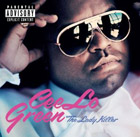
Cee Lo Green: The Lady Killer

RIYL: Gnarls Barkley, Outkast, Al Green

cee loSay what you will about the record industry in 2010 – but given that this was the year Cee Lo Green scored the biggest hit of his solo career with “Fuck You,” things can’t be all bad, can they?

It made bloggers go crazy, scored Cee Lo guest spots on every talk show from Letterman to Colbert (where he rejiggered the chorus into “Fox News”), and offered a welcome stylistic change of pace from just about anything else that’s popular at the moment, but “Fuck You” is still basically a novelty song; to really take advantage of the buzz it generated, Green needed to give listeners an album full of even better songs – and songs that didn’t leave “Fuck You” sticking out like a sore thumb.

Cee_Lo_Green_01

He’s delivered on both counts with The Lady Killer, a swaggering 14-track set that finds the famously restless Green as focused as he’s ever been – both in terms of music and in terms of clear crossover ambition. Like any other neo-soul artist, Cee Lo knows how to craft a retro vibe without settling for a simple homage, but he’s less reverent about the music than most of his peers, and the result here is a loose song suite that’s as proud of its classic soul DNA as it is excited about splicing it into a flashy modern hybrid.

Green worked with a small army of producers on the album, but it doesn’t sound like the work of a committee; in fact, it almost works as a concept album, introducing Green as a Lothario with a “license to kill” in the tongue-in-cheek intro, then following him as he hits the town (“Bright Lights Bigger City”), finds out he’s been jilted (“Fuck You”), and gets his woo on (“Wildflower”) – all while brushing past soul and R&B touchstones from Motown to ’80s synth funk. It’s the kind of album that makes room for everything – production from the Smeezingtons, a Philip Bailey cameo, a cover of Band of Horses’ “No One’s Gonna Love You” – without sounding chaotic or overstuffed. It’s the work of an artist at the top of his game. Though it isn’t as brazenly eclectic as some of his earlier work, longtime fans shouldn’t mistake The Lady Killer‘s comparatively limited scope for evidence that Green is selling out or slowing down; it’s just the logical next step in his inevitable world domination. (Elektra 2010)

Cee Lo Green MySpace page

« Older posts Newer posts »