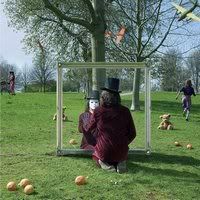
Jimi Hendrix: Valleys of Neptune


RIYL: Buddy Guy, Stevie Ray Vaughan, Phish

The music gods have once again seen the time fit to bless us Earth-bound humans with some more musical treasure from the late 1960s, this time with 12 previously unreleased studio tracks (mostly from 1969) from the greatest guitarist of all time. They sound more like they were recorded in 2009, which is fitting since Jimi was way, way ahead of his time. Thanks go to Jimi’s timeless skills and mixing by the great Eddie Kramer, who engineered Jimi’s recordings back in the day.

The title track is obviously the centerpiece of the album, and for good reason. If one tried to imagine a lost track from the First Rays of the New Rising Sun sessions, this is exactly what you would hope for. It’s got the funky sound that Jimi was exploring more and more toward the end of his all-too-brief time here on this rock, along with the metaphysical vibe he was increasingly getting into, with lyrics referencing Atlantean love songs and impending Earth changes. It’s classic late-era Jimi – the louder you turn it up, the better it sounds. The song is sandwiched in between a smoking “Stone Free” and a cover of Elmore James’ “Bleeding Heart,” to open the album with three consecutive numbers featuring Billy Cox on bass, while the rest of the album has Noel Redding.

Jimi’s take on “Bleeding Heart” is an up-tempo bluesy rocker that sets the stage for deep blues treasure on “Hear My Train a Comin’.” The latter is well-known by fans of Jimi’s highly influential Band of Gypsys project, with the Live at Fillmore East version being one of Jimi’s greatest performances. But it’s always nice to get another version of a seminal jam, and Jimi is clearly feeling it here. Clocking in at seven and a half minutes, it’s the second longest track on the album (only “Red House” is longer), and it’s a showcase for all of Jimi’s skills with some nice scatting going on behind the first solo, and then some of his best wailing on the second solo.

The album also features two other premiere performances. “Ships Passing Through the Night” presents a mid-tempo tune about lonely ships hooking up and shaking the blues out of one’s hair. “Lullaby for the Summer” features Jimi riffing out all over, with the trio shifting directions toward a more syncopated groove in the middle of the song. This makes Jimi’s hot licks stand out even more, demonstrating superb use of sonic spacing.

“Mr. Bad Luck” is a funky blues workout from 1967, with Jimi clearly having been in a good mood during the recording. “Lover Man” gets a similarly tasty workout, but it’s Cream’s “Sunshine of Your Love” that conjures the big jam. Several live versions have been released before, but this one is a keeper, with a nice breakdown in the middle that builds back up into a big crescendo.

Familiar classics “Fire” and “Red House” get fresh readings and Jimi’s playing is scintillating on each. “Red House” gets the deluxe treatment with an extended jam taking the track past eight minutes as Jimi digs deep into the blues well. The album closes out with “Crying Blue Rain,” a tune that starts as a slow burner but picks up speed until it’s cruising over a galloping bass line. Jimi doesn’t go wild, but his rhythm playing is quite inventive, creating a superb collective groove that shows how to play for the song. He’s still the master.

The Flaming Lips: Dark Side of the Moon


RIYL: Les Claypool’s cover album of Animals, charity compilations, not Pink Floyd

The decision for the Flaming Lips to cover, in its entirety, Pink Floyd’s classic Dark Side of the Moon has certainly been met with a lot of hostility by people who consider the original to be a sacred artifact of a bygone era that should be treated with an almost religious reverence. Those people have decided to hate this album without ever hearing it, and that’s a shame, because if they did take the time to listen to it, they would have plenty of reasons to hate it on its own merits.

Okay, that’s a little harsh; this bizarre little experiment isn’t horrible by any stretch of the imagination, but it’s certainly not good, and is, as the purists love pointing out, entirely unnecessary. Most of the time the Lips (and on occasion Stardeath And the White Dwarf, who are credited as the sole performers on two tracks and as a back-up band on four others) just don’t seem to be trying. Their big creative decision seems to be on “Money,” when they sing through vocoders. The rest of the the time they just aren’t doing enough to make it really stand out from the original. “Time” gets some looping cough effects for some reason, and “On the Run” is transformed into a bass-heavy acid Jazz jam. The rest is pretty much just Dark Side with added wacky effects and cranked-up bass. It’s not weird or exciting – it’s just boring, not to mention lazy and predictable. Is anyone surprised by the fact that the Flaming Lips happen to be huge Floyd fans? I mean…duh. If the Flaming Lips really want to create a WTF moment, they should leave classics like Dark Side alone and take on something truly unexpected, maybe REO Speedwagon’s High Infidelity or Genesis’ Invisible Touch. Wayne Coyne singing “Land of Confusion,” now that would be a track worth hearing. (Warner Bros. 2010)

Flaming Lips MySpace page

Sound Tribe Sector 9: Ad Explorata


RIYL: Disco Biscuits, Pretty Lights, EOTO

Ad Explorata is Sound Tribe Sector 9’s follow-up to 2008’s Peaceblaster, an album that delivered more of the live immediacy the band is known for. But the jamtronica stalwarts are also known for constantly pushing the boundaries with their sonic explorations, so it’s not shocking to hear the band shifting direction again. STS9’s continued experimentation with electronic technology has driven a few old-school fans away, for it was the band’s instrumental skills that set them apart as a pioneer in blending rock with electronica. But the band’s continually growing fan base knows that STS9 uses modern technology as just one more tool in their musical arsenal, without becoming slaves to it.

“Phoneme” opens the album with almost eight minutes of atmospheric vibe, serving as sort of an appetizer that sets a spacey tone before the giving way to “Heavy,” where trippy synths and hard-rocking percussion conjure some of the classic STS9 sound. “Looking Back on Earth” brings a cosmic vibe indeed, but with drummer Zach Velmer powering the tune’s deep groove with a heavy attack. The psychedelic synth work is definitely the star of this album, with bassist David Murphy and guitarist Hunter Brown often joining keyboardist David Phipps in the synth and sampling mayhem, as they increasingly have been onstage. But while Brown’s tasty fretwork is perhaps at too much of a shortage here, most of the songs are well-served and probably inspired by the synth-heavy formula. Longtime fan favorite “EHM” receives overdue studio treatment and the tune is a keeper. Inspired by author John Perkins’ best-selling “Confessions of an Economic Hitman,” the epic song about the folly of predatory capitalism opens with a spooky vibe that builds slowly but surely into a monster groove that epitomizes just how dynamic the band can be with multiple synths. Percussionist Jeffree Lerner adds some heady cowbell work (even though it too is from a synth) as the song explodes into an up-tempo jam.

“Atlas” is another major highlight, featuring Velmer at his dynamic best over a majestic sonic tapestry that feels like it could be the soundtrack for a Rebel Alliance assault against the Empire. “Re:Stereo” takes listeners on more of a down-tempo journey, while “Central” brings things back up into another spacey groove before “Lion” drops an intense rocker similar in vibe to “Atlas.” The new album isn’t going to win back that smaller demographic of old-school fans that drifted away when the band started using more synths and samples in the middle part of the past decade. But it’s another strong collection of sonic explorations demonstrating that STS9 is a band that will never be content to hit auto-pilot. (1320 Records 2009)

Sound Tribe Sector 9 MySpace page

21st Century Breakdown: David Medsker’s Top 10 Albums from the 2000s That You Never Heard

A problem, sadly, that tended to happen far too often this decade.

I’m not going to write some lengthy intro for this; if you’re reading our continuing coverage of the decade that was – and thank you very much if you are – then you know that despite music’s increased exposure thanks to the interwebs, it also became damn hard to either find a good band or vault them to the next level. Several of the bands in the list below actually had both good buzz and record company support behind them, and still failed. Such was the ’00s: as the Icehouse song goes, no promises.

Here are ten of my favorite albums that no one bought, or at least, didn’t buy enough of.

Sugarbomb: Bully (2001)
A small but devoted cult has built around this completely insane group of Ft. Worth power pop aficionados. Legend has it they dressed like women and kissed onstage while rocking the ever-loving shit out of their audience. This was their only major label release, and because of the sudden belt-tightening the nation suffered upon its release – it came out September 25, 2001, ow – the band was dropped shortly afterwards. Pity, because these guys could play. And they could sing better than they could play. And man, could they do a, um, killer Queen impression. Think Muse sounds a lot like Queen? Listen to “After All,” the closing track on Bully.

The main songwriters in the band, Les Farrington and Daniel Harville, seemed so distraught over the collapse of the band that they never really gave it another shot, at least in terms of playing to their strengths. Last I heard, Harville was slumming in some Shiny Toy Guns-type band that’s far beneath his abilities, whlie Farrington has pulled an Andy Sturmer – a fitting analogy, since Farrington’s a big fan of Sturmer and his band Jellyfish – keeping virtually no profile on the web. Again, pity. All concerned deserved better.

Midnight Juggernauts: Dystopia (2008)
Odds are, if a band signs to Astralwerks, I’m going to like them. but even I was unprepared for how totally fucking awesome the Midnight Juggernauts’ debut album Dystopia is. They’re an Australian trio that melds Daft Punk beats to late ’80s modern rock stylings, with perhaps a dash of Air-style ambience. And best of all, they’re an actual band, playing these songs on real guitars, keys and drums. Anyone who listens to Peter Murphy, David Bowie and Daft Punk should own this at once.

The Lolas: Silver Dollar Sunday (2001)
Poor Tim Boykin. He’s sickeningly talented, a guitar virtuoso and a wizard at stacking harmonies like a Jenga block, but his power pop band the Lolas never quite got off the ground. It could have been a matter of timing; the band sputtered to a halt shortly after MySpace took off, and according to the band’s MySpace page, they haven’t checked it since May 2006 – but even if he had kept waving the power pop flag, the odds of a band like the Lolas making the jump is unlikely, especially if they’re based in Birmingham. The Alabama Birmingham, not the UK Birmingham. For those who scoured NotLame’s release sheets in the early ’00s like a meth addict looking for another fix, though, the Lolas’ sophomore effort Silver Dollar Sunday was, pardon the pun, a hell of a score. They wiped the floor with Oasis on “Long Time,” and turned in the best Stone Roses impression ever on “Wild Blood.” If the YouTube vids are any indication, Boykin is now a long-haired guitar instructor in his hometown of Birmingham. I urge everyone within 200 miles of his house to sign up for lessons.

Delays: Faded Seaside Glamour (2004)
Their influences are apparent – The Hollies, Cocteau Twins, the La’s – but there isn’t a band alive quite like Delays. Their debut single “Nearer Than Heaven” is a flat-out skyscraper, and Greg Gilbert’s androngynous tenor/falsetto combo is as unique a voice as you’ll find in music today. This was one of those records that just made me dance around the house in a ‘hey it’s all going to work out’ kind of way. And in 2004, that was a stark contrast to the other dark, melancholy shit we were being subjected to. This album makes me glad to be alive. That’s as nice a compliment as one can pay, if you ask me.

Rialto: Night on Earth (2001)
They may have been late to the Brit Pop party (and extremely late at that, dropping their debut in 1998), but Rialto singer and chief songwriter Louis Eliot has a way with a tune – ask the people in South Korea, they loooooove Rialto – and in many ways the band improves upon their eponymous debut with Night on Earth. They had two drummers first time around, but are down to one drummer and the occasional machine on this one, and in the case of a melodramatic song like “London Crawling” it fits like a glove. “Idiot Twin” is one of the best songs Depeche Mode never wrote, and “Shatterproof” will make any fan of OMD’s “If You Leave” squeal with delight. Of course, I bought the import, convinced that it would never see the light of day in the States. Sure enough, two months later, Eagle Rock releases it, with bonus tracks to boot. So I bought it again, and gave the import to a friend.

Gene: Libertine (2001)
As much of a Britpop fan as I was during the mid-’90s – seriously, what the hell else was I going to listen to, Hootie and Alanis? – Gene never grabbed me the way I expected those endless Smiths comparisons to. I loved “Fighting Fit” from Drawn to the Deep End, but scarcely listened to anything else from that album. When their 2001 album Libertine came up for grabs during my tenure with PopMatters, I thought, ‘What the hell,’ and ended up thinking, ‘Hell, yes.’ More mature, more patient, and eager to explore different textures, Gene basically laid the groundwork between Coldplay’s Parachutes and A Rush of Blood to the Head. You’re welcome, Chris Martin.

Paul Melancon: Camera Obscura (2002)
When this album was released, I had daydreams about hooking up Atlanta pop genius Paul Melancon with Jon Brion. It made perfect sense to me; they both love classic pop melody, fractured fairy tales, and the Beatles. It’s a match made in heaven, and Brion will make him a star. Ah, but being signed to an Indigo Girl’s record label apparently only had so much pull, and the album didn’t quite jump into the general consciousness the way I hoped it would. Damn. Didn’t they hear his love letter to ELO mastermind Jeff Lynne, cryptically titled “Jeff Lynne”? Even better is the album’s final track “Fine,” which sports one of those great wordless choruses. Oh, and it ends with arson, like all love stories should.

Click to hear Paul Melancon’s “King Sham”

Republic Tigers: Keep Color (2008)
The Republic Tigers are like the American version of the Feeling – they are simply not from their time. Listen to those melodies (the A-ha tribute “Buildings and Mountains”), the patience they take with the arrangements (”Golden Sand”). Ideally, someone will hear this album and think that that is how songs should be written. But after the whole Paul Melancon thing, I’m not holding out hope. For what it’s worth, guys, the people who grew up in the ’80s think you guys are peachy keen.

Click to hear the Republic Tigers’ “Fight Song”

Kenna: New Sacred Cow (2003)
This was going to be included in our piece on the best albums you never heard, but we based the inclusion of the albums on which artists were willing to answer a few simple questions, and Kenna forwarded us to his publicist…who couldn’t be bothered to respond. Ironically, Kenna called me shortly before his second album came out, even though I told the label that we needed to reschedule the interview. As it turned out, the interview was never rescheduled, and to borrow a phrase from Led Zeppelin, it makes me wonder. Here’s me, an avowed fan of the man – one of the best concerts I ever attended was a Kenna show at Schuba’s in Chicago. The show started at 6:00, and drinks were on the house, woot! – and the label can’t coordinate an interview. I suppose it’s fitting, since labels just have no idea what to do with an artist like him. He’s black, but his music knows no color. You’d think that the fact that his high school buddies, who are now known as the Neptunes, produced the record would be enough. Not so. Oh well. I love this album, and this album also produced one of the most original videos of the year.

Swag: Catch-All (2001)
When we asked Swag singer Doug Powell about Catch All, his stint with one-shot super group Swag, he dismissed it as pedestrian pop, and seemed surprised that anyone would love it. I get where he’s coming from, since the album doesn’t exactly rewrite the rules of pop, but it sports some damn good tributes to the Zombies (”Please Don’t Tell”), Elvis Costello (”Eight”), and the Byrds (”Lone,” “Louise”). And what’s wrong with that? Not a damn thing, if you axe me.

Marillion: Less Is More


RIYL: U2, Simple Minds, Radiohead

It seems a somewhat formidable task to encapsulate two decades of music within the span of a dozen tracks, but Marillion’s latest makes the case that it’s at least worth trying. Summing up the group’s progress following the transition from original singer Fish to current front man Steve Hogarth at the end of the ‘80s, this modest anthology holds together remarkably well, each song segueing seamlessly into the next with scarcely any change in tone or tempo. One can only surmise that that the band is either a stickler for consistency or simply at a loss for new ideas; either way, their sprawling, unhurried sound is as spare as the album title suggests. Songs begin with little more than a few notes on a keyboard or the simple strum of an acoustic guitar before acceding to an underlying, unresolved tension that ripples just below the surface. When the material soars, as with the slightly more emphatic “Hard As Love” or via the bebop rhythms of “If My Heart Were a Ball,” Marillion manage to emulate the plaintive tomes of U2 and Simple Minds. However, aside from the “hidden track” “Cannibal Surf Babe” and a moving cover of Radiohead’s “Fake Plastic Trees” – one of two live bonus tunes – the melodies are somewhat diffuse, showing only a lackluster attempt at capturing a more emphatic sound.

Ironically, when Fish sang with the band during their formative years, Marillion was far more dynamic, though they were constrained by the notion they were simply a poor man’s Genesis. Less Is More suggests the Fish connection is still there, but it’s more like the kind that seeks a hook to hang on. (Eagle Records 2009)

Marillion website

Robyn Hitchcock: I Often Dream of Trains In New York


RIYL: Syd Barrett, Bonzo Dog band, XTC

Always the eccentric, predictable only in his unpredictability, Robyn Hitchcock has never been an easy character to decipher, frequently defying easy accessibility and offering only rare opportunity to peer below his songs’ psychedelic sheen and to meditate on his melodies. Consequently, the concert film “I Often Dream of Trains In New York”, is a rare treasure in that it gives a more intimate view of the man and his muse via a thorough track-by-track replay of an early album many consider his signature achievement.

Hitchcock’s no stranger to cinema, of course. Last year’s documentary “Sex, Food, Death… and Insects” offered a surprisingly candid potrait of the artist in creative mode, a follow-up of sorts to the musical portrait captured in Jonathan Demme’s critically lauded “Storefront Hitchcock.” Hitchcock had a cinematic reunion with Demme more recently in fact, when he was given opportunity to perform a pair of songs in Demme’s current film, “Rachel Getting Married,” following up his acting debut as one of the protagonists in Demme’s remake of “The Manchurian Candidate.”

Regardless, it’s Hitchcock’s allure as an artist with a curious magnetism and slightly off-kilter wit and regimen that enthralls his followers, and if “I Often Dream of Trains in New York” seems to strip away that elusive veneer, it doesn’t detract from his charm or appeal. Performing in a stripped-down acoustic setting and backed by multi-instrumentalist Terry Edwards and guitarist Tim Keegan, he revels in the sentiment, sarcasm and wry irony parlayed by such numbers as “Up to Our Nex,” “I Often Dream of Trains,” “America” and “I Used to Say I Love You,” songs that take on an idyllic, folk-like serenity in this live setting. Even so, the a cappella “Uncorrected Personality Traits” brings to mind the bizarre, unabashed silliness of the Bonzo Dog Band, while a cassette recording of “Sometimes I Wish I Was a Pretty Girl” serves as ample reminder of Hitchcock’s penchant for bizarre lyrical twists. It’s fitting then that the tracks are interspersed with Hitchcock’s own commentary on the origins of these songs, relayed, appropriately, from a seat on a train. Likewise, a bonus feature, “Beyond Basingstoke” offers further illumination and enlightenment.

A must-see for all Hitchcock aficionados, “I Often Dream of Trains in New York” is also an ideal passage for the uninitiated. (Yep Roc 2009)

Robyn Hitchcock website

Gov’t Mule: By a Thread


RIYL: Allman Brothers, Robin Trower, Mountain

Gov’t Mule treads that narrow divide that links jam band excess, raucous Southern rock and blustery white boy blues. Founded by guitarist Warren Haynes and the late Allen Woody, both of whom had been drafted to serve with the Allman Brothers during one of the band’s frequent reshufflings, the duo subsequently launched Gov’t Mule as an active side project in the mid ‘90s.

Since then, Gov’t Mule hasn’t digressed all that much from the rambling jams and blustery exhortations that distinguished the music Haynes and Woody created as employees in their day job. In fact, if the band was actually striving to set itself apart, it was never all that evident. For the most part, the group’s recorded catalog has been dominated by concert recordings, which have emphasized their instrumental prowess over more concise songcraft.

To a certain extent then, By a Thread marks something of a turning point in their recording campaign, placing a focus more on the material rather than their usual pyrotechnics. To be sure, there are the usual overwrought growls and howls, as evident in such blazing rampage of “Broke Down on the Brazos,” “Steppin’ Lightly” and “Monday Morning Meltdown,” each a searing onslaught that finds them adhering to more turgid testimonials. On the other hand, “Forevermore” and “Frozen Fear” suggest the band might be willing to treat the material with a hint of subtlety by toning down the more aggressive posturing. Of course, fans need not worry about an abrupt change of course, but it is worth noting that By a Thread might provide something of a kick to Govt Mule’s newer recruits. (Evil Teen 2009)

Gov’t Mule MySpace page

The Black Hollies: Softly Towards the Light


RIYL: The Beatles, Happy Mondays, The Takeover UK

Take the late ’60s Beatles and other British blues/psychedelia, shoot it through with early ’90s Madchester energy, add a sprinkle of indie pop sensibility and you get groovy if none-to-deep third album by the Black Hollies. Depth isn’t really necessary for this kind of album, though. Softly Towards the Light is so indebted to its sources that every track seems immediately recognizable, as if you’d heard these songs long ago sitting in front of your parent’s old hi-fi system as a kid. This immediately begs the question, “Why not listen to the originals, then?” and that is where that those “sprinkles” of modern production and indie introspection provide just enough of something different to make it resonate with today. Much of this can be attributed to Justin Angelo Morley’s breathy vocals, which carry a forceful earnestness that gives Doors-esque lines like “Lead me to the fire burning in your soul” an innocence rather than lustful intent. That is something that seems to be missing on Softly Towards… as British Blues had a earthy carnal quality, and Madchester was hedonistic in many ways, the Black Hollies bring a lighter touch that provides an airy, nothing short of happy feeling that is rare in pop music. Happy is usually relegated to overproduced, kid-smiley, bubblegum pop and not considered appropriate for adults. Here, this positive energy works extremely well with the counterpoint of Nicholas Ferrante’s bombastic drumming. The danceable, get-your-feet-moving pleasure of the Black Hollies can be credited to being caught up in Ferrante’s powerful rhythms that manages to ground them just enough to keep the rest of the band from floating away. The power tracks on the album that bring all of this together are the outstanding “Gloomy Monday Morning” in the number two slot, and “Number Ten Girl” with its soulful, darkly trippy groove.

All in all, Softly Toward the Light is an excellent album by the New Jersey quartet, and demonstrates not just a fidelity toward their sources and craft, but a real passion for making these classic sounds their own true expression. Ernest Jenning Record Co.

The Black Hollies MySpace page

Devendra Banhart: What Will We Be


RIYL: Donovan, Marc Bolan, Veviter

Toiling within the ranks of the indie underground, Devendra Banhart has managed to elevate himself into the highest ranks of the so-called “freak folk” hierarchy. His last album, Smokey Rolls Down Thunder Canyon, made a pitch to expand that tag, with Banhart attempting to meld his obtuse approach with the idyllic imagery of the L.A. environs that spawned such ‘60s lynchpins as Neil Young, CSN, the Mamas and the Papas, Joni Mitchell, and various others that made music in those hallowed hills. Likewise, his recruitment by the majors – in this case, Warner Bros. records, home to many of those aforementioned icons – seemed to indicate a concerted effort to break through the barriers.

Indeed, while Banhart’s new label affiliation might seem a concession to commercialism, in truth, the results are every bit as eclectic…and, for that matter, every bit as eccentric…as his earlier efforts. The songs are sung in both English and Spanish, and rather than the clear, coherent melodies identified with the so-called Southern California elite, Banhart still shifts his set-ups – often radically and in the space of a single song. Consequently, “Rats” has a somewhat foreboding start before segueing abruptly into a state of kinetic jubilation. The jazzy inference of “Chin Chin & Muck Muck” morphs several times before the song hits its stride. Likewise, “Angelika” might have succeeded as a soothing serenade had it not accelerated midway through into a sizzling Latin samba.

Still, for all his abrupt turns, Banhart retains a decidedly old school stance. His melodies may seem somewhat amorphous, but his quivering vocals and loping tempos frequently recall the pixie-like warble of Donovan and Marc Bolan. A couple of tracks might bode well for future sing-alongs, specifically “16 & Valencia Roxy Music” and the gentle Spanish serenade called “Brindo.” As an album that’s magnified by ambition and grand designs, What Will We Be may well be his best yet. (Warner Bros. 2009)

Devendra Banhart MySpace page
Click to buy What Will We Be from Amazon

The Flaming Lips: Embryonic


RIYL: Beck, early ’70s Miles Davis, pre-Dark Side Pink Floyd

It would be far too easy to call the Flaming Lips’ new album Embryonic “trippy.” Any of the albums they’ve released over the past decade could fit that description. But as it stands, the 18-track double disc affair is in fact pretty far out, even for the Lips. Drawing from the sound palettes of early ‘70s Miles Davis (the instrumental “Scorpio Sword” is particularly reminiscent of the edge-of-insanity performances that marked the days when Chick Corea and Tony Williams pushed Miles into serious avant garde territory) and pre-Dark Side Pink Floyd (think of Floyd’s soundtrack work on More), Wayne Coyne and crew have woven a heavy, dynamic soundscape that works best as a piece.

Flaming_Lips_15

Indeed, few songs stand out from the whole, one of the exceptions being the typically novel “I Can Be a Frog,” which is impossible to hear without thinking of its accompanying video. And while Wayne’s voice has taken a beating over the years, he sings to his strengths and lets the fuzzed-out guitars and vintage electric piano sounds take center stage throughout the disc. In fact, in most cases vocals are mixed about equally with the rest of the instruments, avoiding pop melodies and song structure altogether.

This very well could be the greatest album the Flaming Lips have concocted to date, though there’s so much happening here that it might take a few years to sink in. The Soft Bulletin and Yoshimi Battles the Pink Robots can retain popular favor in the meantime, but Embryonic is bound to fascinate and confound for years to come. (Warner Bros. 2009)

The Flaming Lips MySpace
Click to buy Embryonic from Amazon

Related Posts